

FAQ and answers

FAQ and answers

Everything You Need to Know About Non-Invasive Prenatal Testing (NIPT)

Who should take the Qualified® test?

  • Singleton pregnancy
  • Twin pregnancy 
  • IVF pregnancy 
  • Donor egg pregnancy

Where is the test done?

The Qualified® Test is performed in Italy at a state-of-the-art genetic laboratory in Turin.

How long do I have to wait for the test results?

Qualified® test results are available within 2–3 business days after the sample is received by the laboratory.

How accurate is the test?

Using technology based on cell-free fetal DNA (cffDNA), the Qualified® Prenatal Test can identify more than 99.9% of pregnancies affected by Down syndrome. In comparison, traditional statistical screening tests for Down syndrome (double and triple tests) may fail to detect up to 15% of affected pregnancies.

Compared with conventional prenatal screening tests for Down syndrome, the Qualified® Prenatal Test produces significantly fewer false-positive results, reducing the need for invasive diagnostic procedures such as amniocentesis.


The Qualified® Prenatal Test is a screening test. Any positive result should be confirmed by a diagnostic procedure such as amniocentesis, chorionic villus sampling (CVS), or cordocentesis.

Is Qualified® safe for me and my baby?

Yes, it involves only a simple blood draw at any time of day, regardless of the food, drink or supplements.

How do I know if the Qualified® test is right for me?

Noninvasive prenatal testing is required for all pregnant women who will be 35 or older at the time of child delivery. It is also recommended for pregnant women who had a miscarriage or a fetus with a genetic abnormality in their previous pregnancy. In addition, it may be done by pregnant women who are afraid of invasive procedures such as amniocentesis or chorionic villus sampling.

Can the Qualified® test be applied to IVF pregnancies?

Yes, the Qualified® test may also be applied to pregnancies achieved by in vitro fertilization.

Does a normal test result mean that my baby is completely healthy?

There is no test that can guarantee that your baby will be completely healthy. Also, there is no single test that can test all genetic abnormalities that may occur in a fetus. Genetic counseling is required before and after testing, in addition to a mandatory regular ultrasound examination by your gynecologist.

How does Qualified® prenatal testing work?

While you are pregnant, parts of the developing placental DNA can be found in your blood, besides your DNA. Qualified® prenatal test analyzes this very fetal fraction to determine genetic health of the baby and to rule out, with high certainty, the probability for Down syndrome, Edwards syndrome and Patau syndrome, as well as other chromosomal abnormalities, microdeletions and duplications.

How is the Qualified® prenatal testing different from any other screening test for Down syndrome?

The Qualified® prenatal test gives clear answers as early as in the first trimester after a simple blood draw. Other screening tests for Down syndrome are performed later in the pregnancy and require several visits to the doctor. The risk is assessed by a combination of several non-specific parameters. Some of these parameters are the age of the pregnant woman, specific ultrasound examinations, free beta hCG and PAPP. Statistical screening tests during the 1st trimester are associated with a false positive rate of up to 5%. 

The Qualified® prenatal test uses a unique method of a targeted DNA analysis combined with quality control thus achieving over 99% detection rate and a false positive rate of less than 0.1%. 

Should I consider the Qualified® test if I’m under 35?

Yes. Professional societies’ guidelines support the option of noninvasive prenatal testing for the general population. The Qualified® prenatal test has been thoroughly tested in women under and over 35. Most babies with Down syndrome are born to pregnant women under the age of 35, even though the risk for Down syndrome is higher for pregnant women over 35. 

When can I take the Qualified® test?


The Qualified® Prenatal Test can be performed as early as the 9th week of pregnancy through a simple maternal blood draw.

I am expecting twins. Can I take the Qualified® prenatal test?

The Qualified® Prenatal Test can also be performed in twin pregnancies through the TWIN BASIC, TWIN 360°, and VANISHING TWIN options. In twin pregnancies, fetal sex is interpreted as follows: if a Y chromosome is detected, at least one of the babies is male; if no Y chromosome is detected, both babies are female.

Still Have Unanswered Questions About Prenatal Testing?

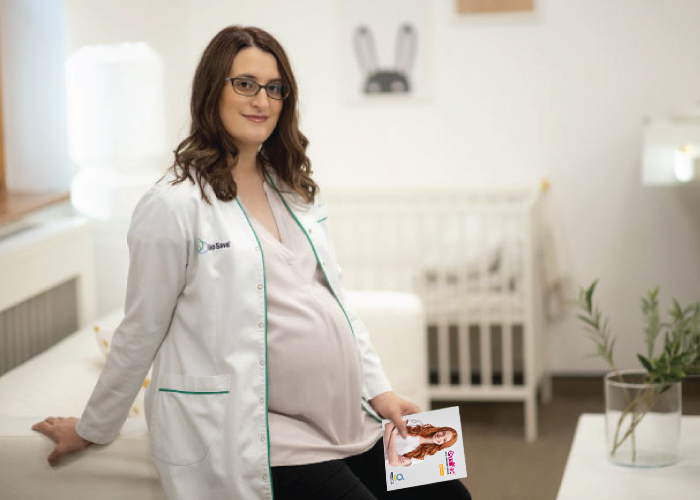
My name is Milica Kovjenić, Master of Pharmacy - Medical Biochemist. During the last five years of my work at Bio Save Laboratory, my professional interest has been directed solely on prenatal diagnosis. Despite my continuing education and keeping up with the latest global trends in the field, during my pregnancy, I had multiple questions for my gynecologist regarding genetic and developmental abnormalities. By complying with the guidelines and clear recommendations from the experts in this field, noninvasive testing provided all pregnant women, including me, a more comfortable and carefree pregnancy. I will try to answer all of your questions. Should you have any additional questions, besides the ones found on the website, feel free to contact me directly at milica.radovac@biosave.rs    My team and I will be happy to give you clear answers to all of your questions.
Still Have Unanswered Questions About Prenatal Testing?

Sign In